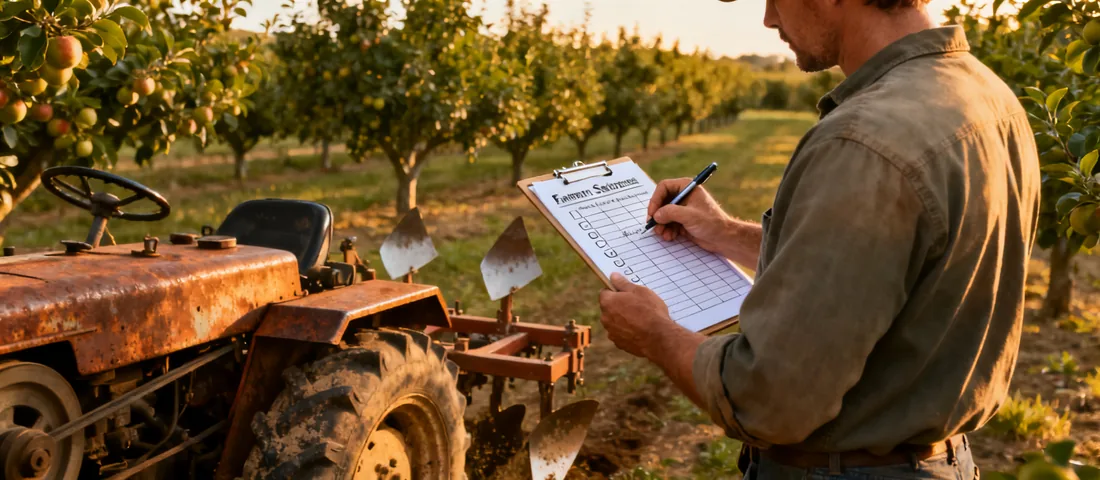
1. Capture the crop plan
List crops, hectares, rotation years and must-finish dates. Note irrigation geometry—drip tape laterals or center pivot circles—because traffic patterns change tractor and cultivator choices. Record livestock forage demand if hay or silage shares the calendar.
- Primary crops and expected yield goals
- Soil class samples (sand / loam / clay)
- Weather-sensitive planting and harvest windows
2. Size the tractor PTO band
Map draft loads for plow, field cultivator and rotary tiller passes. Kuhn coaches usually start with a utility band for mixed chores, then test whether row-crop horsepower is justified by hectares and working width. Document 540/1000 rpm PTO needs for mower conditioners and balers.
3. Shortlist implements by job
Separate primary tillage, seedbed finishing and forage tools. A plow may handle residue burial while a rotary tiller finishes vegetable beds. Hay baler density targets should match livestock ration moisture—not a single factory default.
TillagePlow / field cultivator / rotary tiller
ForageMower conditioner / round baler
SupportLoader / spare parts kit
4. Stage parts and commissioning
Before peak week, list wear parts for tines, shares, knives and belts with a 48-hour staging target. Commissioning photos should capture ballast, tire pressure, PTO shields and tillage depth stops. Export buyers add ISO 9001 and CE documentation requests here.
5. Decide open disputes with data
When teams debate drip irrigation versus center pivot, or drone spraying versus boom sprayers, Kuhn records the field geometry and labor constraints instead of picking a slogan. Machinery shortlists stay compatible with the water and crop-protection path you actually choose.
Trade-off notes we keep on the clipboard
- Drip vs center pivot: drip raises water-use efficiency on orchards and row crops but needs more lateral labor; pivots lower labor on large circular fields yet constrain tractor headland patterns.
- Drone vs boom sprayer: drones flex on fragmented terrain; boom sprayers keep higher throughput and mature spray drift control rates on broadacre acres.
- Limits we disclose: clay soils can push PTO bands upward 15–20%; rotary tillers are poor substitutes for deep residue burial; baler density set too high on wet forage risks heating in storage.